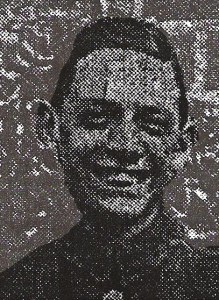
Arthur Sydney CATHERALL
82889, Private, b. 1898, Mold, Flints d. Fri. 26th October 1917 (aged 19)
Sydney came from a well respected family in Clayton, as his father, John Catherall was the Headmaster of Clayton Council School and the family lived at 27, John Street. John’s wife, Emily, came from Wibsey and by the time of their son’s death they had moved to Briarwood Avenue in Wibsey itself. Before being conscripted, Sydney worked at Messrs. Graves and Greenwood in Great Horton as a builder and joiner.
When the time came in early 1916, Sydney joined the West Yorkshire’s, and shortly after was transferred to the Machine Gun Corps of the army. At the start of the Great War each battalion in the army carried only one or two machine guns manned by a small team of specialists but it soon became apparent that their usefulness in trench warfare was greatly undervalued. During the first actions of the war in 1914 the machine gun particularly proved itself to be a vital piece of equipment which could provide the same amount of rapid fire as thirty men with rifles could. It was soon being used on a much larger scale, and the Machine Gun Corps reflected that. By 1916, in addition to the Machine Gun Corps who were attached to army units, each battalion had several machine gun teams, and by the end of the war tens of thousands of machine guns were in active use up and down the Western Front.
At the conclusion of his several months’ long training Sydney was posted to the 62nd Company of the Machine Gun Corps who were based around the Ypres-Salient in Belgium. He arrived in France in early August 1917, but exactly five weeks after arriving there, was killed in action when his machine gun team was targeted by the enemy. The officer in command of his machine gun team, Lieutenant Shepherd, wrote home to his parents that “Sydney died whilst standing at his machine gun. He was always a willing and cheery soldier, and will be much missed by his friends.”
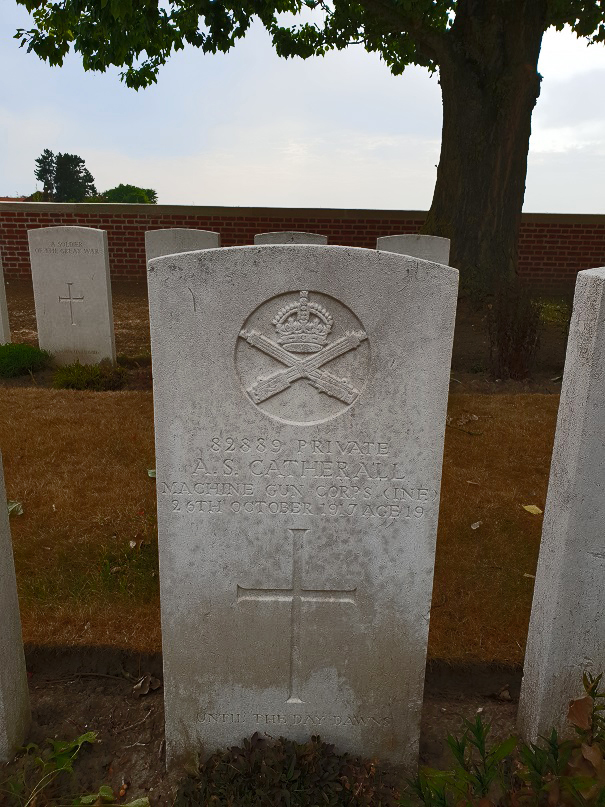
Sydney Catherall was buried by his comrades in Aeroplane Cemetery, Ypres, so-called because only a few days earlier a Royal Flying Corps aeroplane had crashed there, and its shattered frame remained there for many months afterwards.
His Gravestone bears the inscription “Until the day dawns”. His mother Emily received a pension of 5/6p a week.
 Clayton Remembers