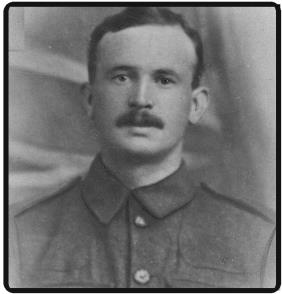
Alfred Ernest GOODMAN
6227, Lance Corporal). b. 1887, Lidget Green d. Mon. 27th September 1915 aged
Ernest (as he was known) was born in Clayton to Charles and Nancy (nee Long). Nany passed away and Charles remarried Martha Iverson. The 1901 census shows Ernest aged 14 living with his stepmother Martha, father Charles and half brother Christian at 21 Beaconsfield Road, in Clayton. The 1911 census shows the family living at 117, Hartington Terrace, Lidget Green with his parents and his occupation is shown as a postman. In 1913 Albert married Amelia Armitage and had moved to Idle.
One of the more patriotic men from the village, Ernest enlisted during the first week of war in August 1914. He trained hard and was sent out in one of the first of many, many waves of reinforcements to the 1st Battalion, Scots Guards, a group of men that had been there from the very start and was given promotion to Lance Corporal.
This in itself was probably no mean feat, as by the time he joined the battalion in France, many men had been there a good deal longer than himself and had also been in the army for a lot longer too. There were still lots of ‘Old Contemptibles’ around, although their numbers were beginning to dwindle as the British casualty rate began to soar.
Ernest survived throughout the German gas attacks of April 1915, when the Axis forces unleashed deadly chlorine gas for the very first time and caught the Allied forces completely unprepared. He also survived much of the routine poundings of the British lines by German artillery which were to become one of the poignant reminders of trench life to veterans at the end of the war. Sadly, he lost his life during one of the first major British retaliatory offensives of the war, the Battle of Loos, when he went ‘over the lid’ and was never seen again.
Ernest is commemorated on the Loos Memorial at Dud Corner Cemetery which stands almost on the site of a German strong point, the Lens Road Redoubt, captured by the 15th (Scottish) Division on the first day of the battle.
The name “Dud Corner” is believed to be due to the large number of unexploded enemy shells found in the neighborhood after the Armistice. On either side of the cemetery is a wall 15 feet high, to which are fixed tablets on which are carved the names of those commemorated. At the back are four small circular courts, open to the sky, in which the lines of tablets are continued, and between these courts are three semicircular walls or apses, two of which carry tablets, while on the centre apse is erected the Cross of Sacrifice.
Ernest was born and grew up at 117, Hartington Terrace, Lidget Green with his parents Charles and Martha and his younger brother Christian.
Ernest is mentioned on a few occasions in the ‘Shipley Times and Express‘. A history group in Shipley has produced this information panel detailing letters home and giving a fascinating insight into the life of an ordinary soldier.
Christian Goodman
TynesideZ/11358 b. 1893. d 28th October 1918.
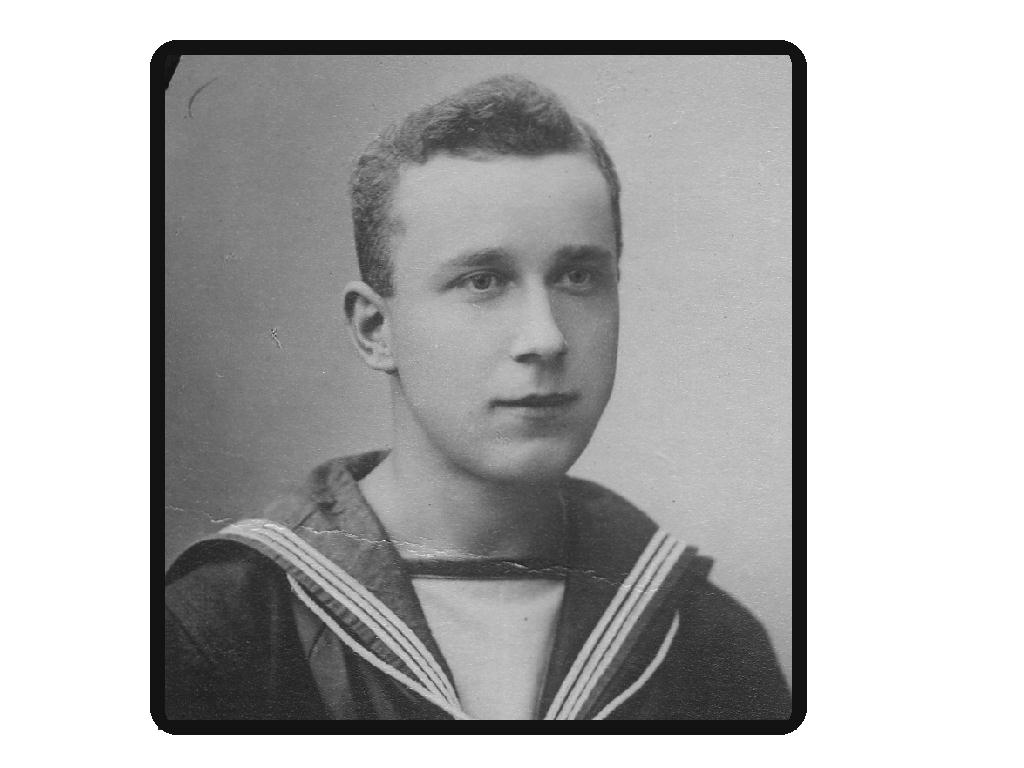
Christian was born and grew up at 117, Hartington Terrace, Lidget Green with his parents Charles and Martha and his elder (half) brother Ernest.
Christian (aged 25) was also to join in the war, and enlisted into the Royal Naval Volunteer
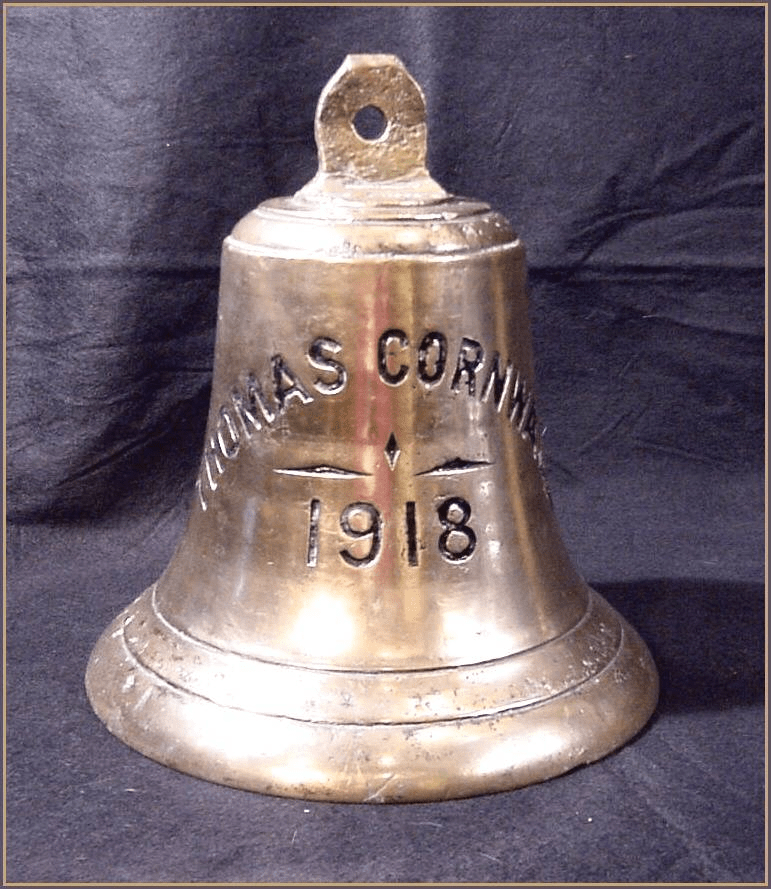
Reserve as a Signalman aboard the trawler H.M Thomas Cornwall in 1917.
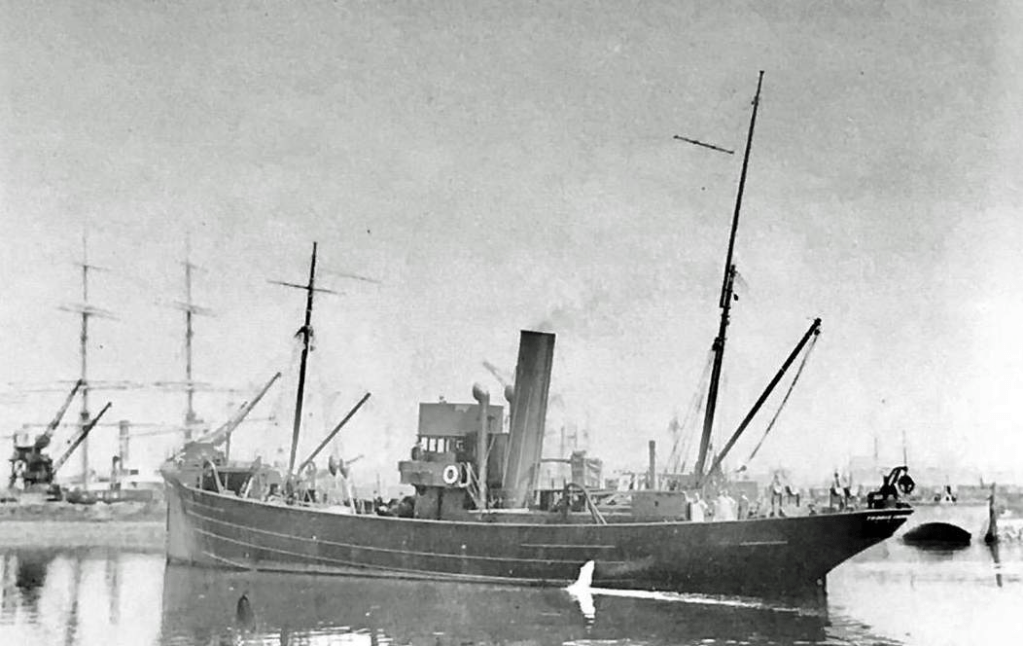
The Thomas Cornwall was a steam trawler taken over by the Admiralty, whilst under constuction at Lobnitz & Co Ltd, shipbuilders in Renfrew, Renfrewshire, and converted into an armed patrol vessel. The HMT THOMAS CORNWALL, also reported as Admiralty Trawler No 445, was based at Grimsby and was lost following a collision with an un-named vessel, during an East Coast patrol, off Filey Bay on 29th October 1918.
During the collision Christian was drowned, just days before the armistice of 11th November. A total of 20 crew died during the sinking. This was the last vessel to be lost off the Yorkshire Coast during the Great War.
Christian worked as a Stationary Printer and was a member of the Typographical Association, a printers union. His death is recorded in associations periodical ‘The Typograhical Circular’.
Christian is commemorated on Chatham Naval Memorial. Christian is, for some reason, not recorded on the Clayton church memorial, but is however remembered on the Victoria Park memorial.
Royal Visit
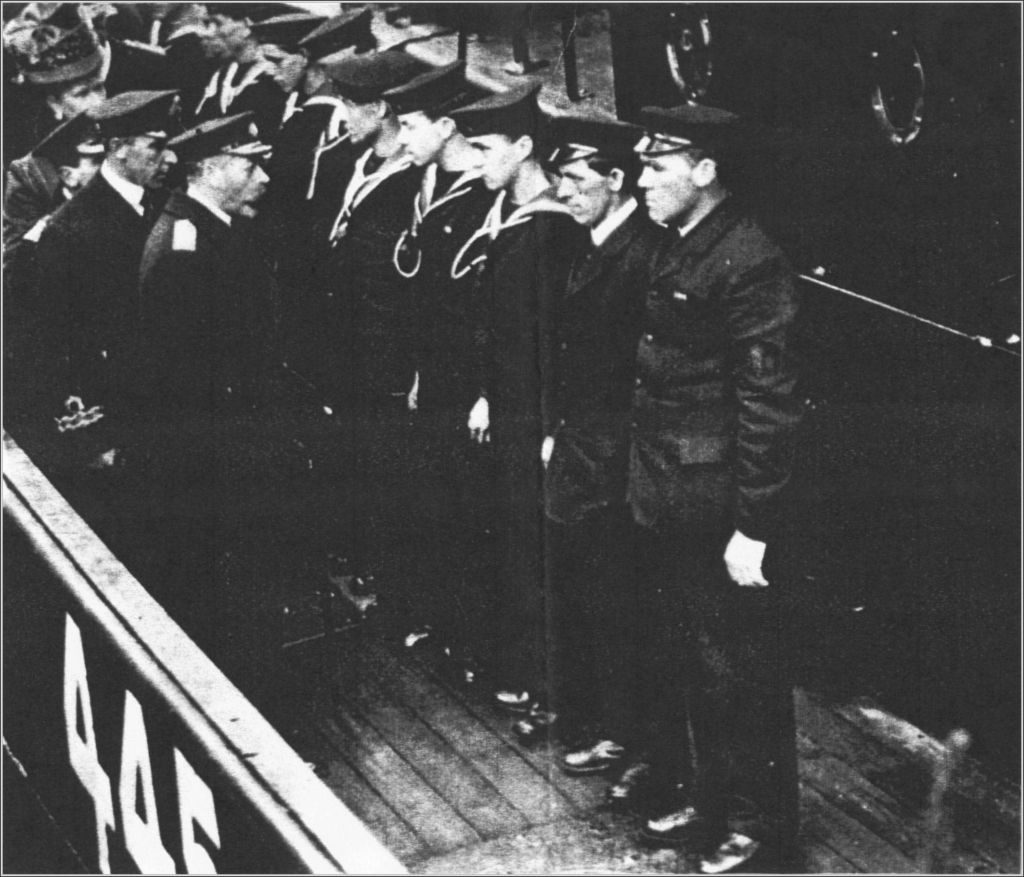
“On 10th April 1918 King George V and Queen Mary visited the vessel. The Grimsby Evening Telegraph reports: King George V & Queen Mary inspecting the crew of the THOMAS CORNWALL at Immingham Docks on 10th April 1918. Queen Mary is said to have commented to King George V ´Well George, this is the first occasion we have been on a minesweeper’. The first crewman on the right is Arthur Young (1884 – 1918), one of twenty who died on the HMT Thomas Cornwall.” Read more at wrecksite: https://www.wrecksite.eu/imgBrowser.aspx?8935
 Clayton Remembers