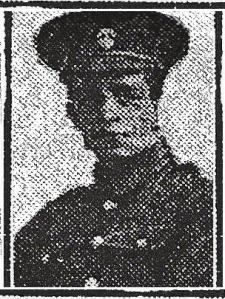
William HEATON
29881, Private. b. 1895, Bradford d. Tue. 2nd April 1918 (aged 23).
Born and bred at Old Dolphin, Clayton Heights, William had lived there throughout his life along with his sister Marion and parents Walter and Hannah.
William was apprenticed as a Woolsorter until he enlisted in 1915 in Halifax into the 1st/6th Battalion of the Northumberland Fusiliers. His time in France from early 1916 onwards was similar to that of many of his comrades from Clayton. Having arrived just in time for the ‘big push’ he was present at the Somme campaign and was spared injury.
William served throughout 1917 in many different sectors of the front, some quiet, and some not so quiet. Despite the fact that most of the portrayals of trench life in modern times are an on-going series of preparations for the next offensive, in reality this only took up a small minority of the average soldier’s time at the front. The vast majority was spent on ‘routine’ watch duties in front-line trenches for several day stints at a time before being rotated through the reserve trenches and the base camps behind the lines for rest and recuperation. In addition to this, most offensive campaigns only happened in small sections of the front, and therefore although valuable the soldiers, and resources had to be pooled in these areas, the rest of the line still had to be permanently manned by Allied troops. This meant that many soldiers were often spared the atrocities, at least for a short period, by being in these ‘quiet’ sectors.
William’s luck ran out in April 1918 when he was serving in the Somme region as the German Spring Offensive began. As with the rest of the British Army, William withdrew, and was caught up in the chaos of the retreat for the first ten days until he was separated from the rest of his comrades and never seen again.
There was still no news of his death over a month after he actually fell, and his parents Walter and Hannah Heaton of 75, Old Dolphin placed an appeal in the Bradford Weekly Telegraph for any soldiers returning to the region, asking about the whereabouts or fate of their son. No information was ever given and they had to wait nearly eight months to finally receive confirmation of their son’s death.
William is commemorated on the POZIERES MEMORIAL.
 Clayton Remembers