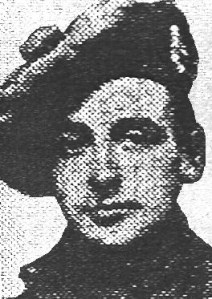
Ernest LUND
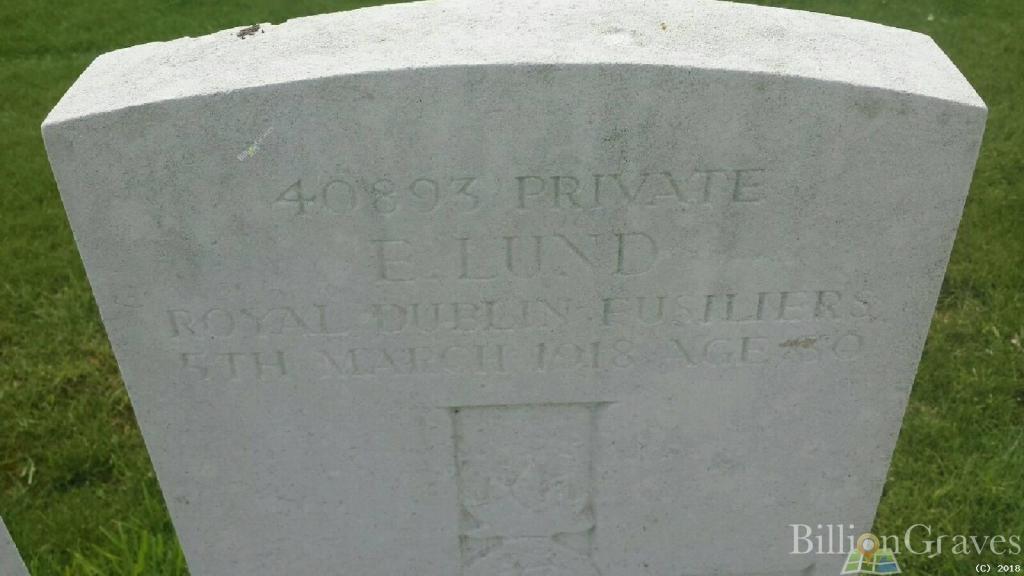
40893, Private. b. 1895, Bradford d. Tue. 5th March 1918 (aged 25).
Ernest was a single man who had grown up in Clayton Heights with his parents before buying a house at 11, Western Square, Queensbury shortly before being conscripted. He joined the Highland Light Infantry, a regiment that by that time would have had very few men from the Highlands in it, as most of its recruits were from all over the country. This was typical of the later stages of the war, as from the Somme onwards men were placed in regiments short of men instead of the long standing system of men joining their local or regional regiments.
By the close of the war, each county or city regiment might have had a proportion of men from their region present within the ranks, but the rest were a mixed bag from whichever area was producing most recruits at the time that particular regiment was suffering from a manpower shortage.
Ernest was moved again shortly afterwards to the 2nd Battalion, Royal Dublin Fusiliers and this was to be the regiment he was to serve with throughout his time in the trenches.
Unlike most of the other casualties, Ernest died in what was classed as a ‘quiet spell’ during the hostilities. At the time of his death, both the British and German armies were ‘recharging’ after the fierce battles of Passchendaele and the Cambrai at the close of the previous year. Unbeknown to the Allies, this period was a time of intense preparation for the Germans as they steeled themselves for their Spring Offensive which caught their enemies totally unprepared. Ernest’s group were probably on a routine trench tour at the front when it is most likely one of two things happened to cause his death.
Firstly, and most probable, is that an artillery bombardment occurred on Ernest’s position killing him and some of his comrades. These were regular events that in quiet periods according to some veterans ‘happened like clockwork’, as neither side could really be bothered so long as they sent over their quota of shells for the day. The second alternative which is also very possible is that he was killed by sniper fire. The German armed forces maximised the potential of using snipers to pick off exposed enemy troops and inflicted many casualties right through the war by this method. The British never really used snipers to their maximum effect even though each battalion had a selected group of Rifleman (such as Prince Pullan) but these men never really inflicted as many casualties as their German counterparts did.
Ernest is buried at Villers-Foucon Communal Cemetery, Somme, France.
 Clayton Remembers