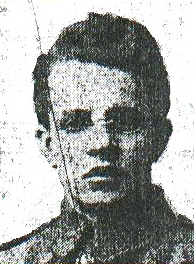
John LUNNESS
41593, Private. b. 1895, Bradford d. Sun. 7th November 1915 (aged 20).
At the time of John’s death he was far from any form of enemy battles or action, indeed there were probably no Axis forces within a couple of hundred square miles of his position. The cause of his death was something far more subtle and sinister: dysentry. This illness would strike down many soldiers before the conclusion of the war. It was possibly at its worst on the beaches of Gallipoli, because not only had the British and ANZAC forces based there to cope with being in such a precarious position geographically but also had to deal with heat and conditions which were virtually unbearable.
The lack of hygiene was a huge problem for the Gallipoli force as although many diseases were present in the trenches, the environment around the Gallipoli Peninsula meant that water soon became infected and stagnant.
John had been sent there in the Royal Army Medical Corps as part of the relief force to transport the sick, wounded, and dying off the Peninsula and hopefully back to Britain. He was based on the hospital ship the H.M.T. Dongola but it was whilst aboard on a homeward-bound trip that he contracted the dreaded dysentery. The ship’s chaplain sent a letter to his parents explaining that “…he tried to carry on the good work whilst on many duties.” and that he had passed away peacefully. During the August of the Gallipoli campaign it was estimated that nearly eighty percent of the troops based on the Peninsula contracted dysentry at some level or another.

Throughout the Great War the Medical Corps was present at every battle and campaign to tend to the wounded and dying and often did this unthanked and in treacherous conditions. Its Private soldier’s main job was as stretcher bearers bringing in the wounded from no-man’s land, often with German gunners and snipers trying to kill them in the process. By the end of the war the Medical Corps had saved many lives which might otherwise have been lost. The RAMC Stretcher bearers were respected by many of the soldiers in the trenches, and to live up to its accolade had received more Victoria Crosses (the highest award for gallantry and bravery possible) than any other single group of men serving in the front line.
John had enlisted in Chorley soon after the war broke out but was not the only family member to serve. He had three other brothers all serving, including his twin brother Walter who was wounded twice in 1917 and 1918 and also received the Military Medal for bravery. The family (including John’s parents George and Ann) lived at 96, Prince Albert Square, Queensbury and John, who lived at 102, Old Dolphin was closely associated with many of the local churches as a Sunday school teacher at Clayton, Clayton Heights and also Stocks Lane for some years.
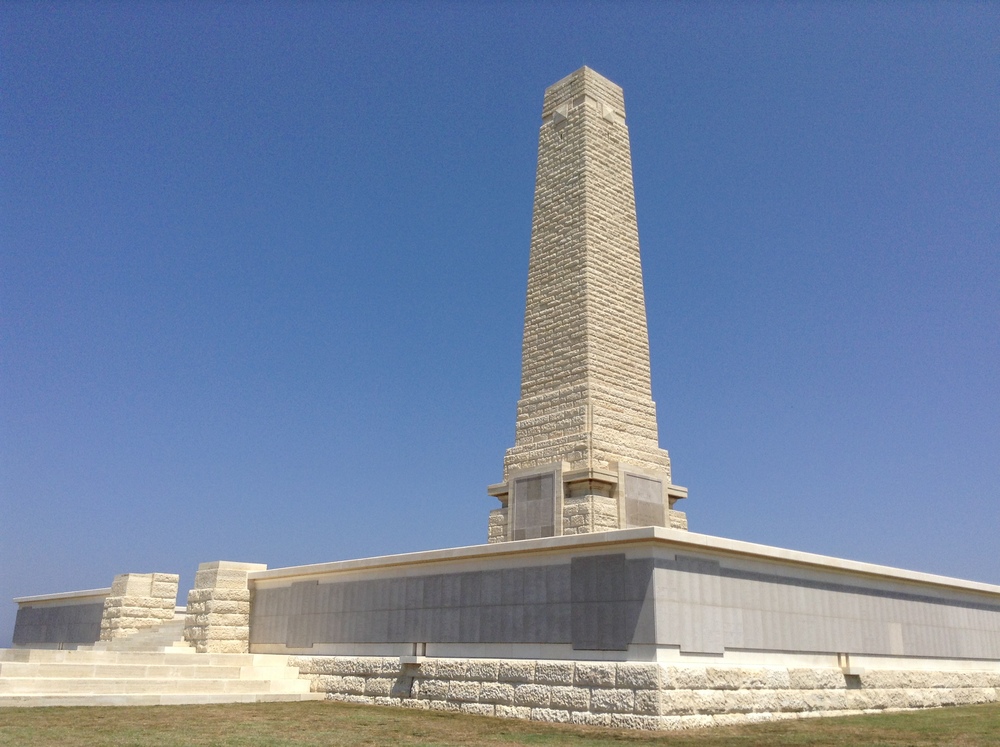
Perhaps his death whilst far out to sea prevented the eventual return to Britain of his body so, as with naval traditions, he was laid to rest in the ocean (which would explain the no known grave). He is commemorated on the Helles Memorial in Gallipoli.
 Clayton Remembers