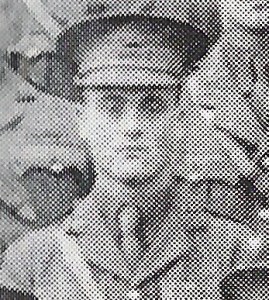
John William WORSNOP
2nd Lieutenant. b. 1893, Bradford d. Fri. 30th June 1916 (aged 23).
Born into a relatively prosperous family in Great Horton, John completed school and began his career as a solicitor’s clerk in the city centre. When the war began, however, he decided to join up into the newly formed Bradford Pals Battalion. Unfortunately, the 1st Bradford Pals were already up to full complement so he became a member of the 2nd Bradford Pals and started his military life as a Private.
At some point during training, it was decided that he had either relevant previous experience (such as time in the Territorial Army or leading scouts) or alternatively, that he showed good leadership qualities and he was given an officer’s commission to 2nd Lieutenant.
On completion of their training the Pals travelled out to Egypt in January 1916 to be stationed near Kantana and the Suez Canal, but this was to be short-lived as they were sent to France within a couple of months. Between February and June the Pals had a relatively quiet time in comparison to what the following few months would be, and John would have adjusted gradually to the ways of the trenches.
During the afternoon of June 30th, the day before the Somme Offensive began, it was decided to send a raiding party into no-man’s land in order to determine the state of the German trenches after a week long artillery bombardment, and additionally to check that the barbed wire was cut in readiness for the attack. The 2nd Bradford Pals selected four officers and 38 other ranks for this mission, under the command of a Lieutenant Clough; John Worsnop was one of the other three officers going. At this point it is probably easier to allow Lt. Clough’s report (published in Hudson’s Bradford Pals book) to explain exactly what happened:
“Party left our front line trenches as scheduled at 12.28pm, 30th June 1916. Advance was slow owing to numerous shell holes and flares. Apparently our party was seen as soon as we had left our own trenches for they seemed prepared for us and we were met by bombs when between 25 and 30 yards from their trenches. They sent up a single green rocket and formed a barrage of hand grenades in front of us and trench mortars and artillery behind us. The trenches seem fairly knocked about and the wire was cut where we were, in sufficient quantity to allow the passage of troops. Their trenches seemed very full of men and apparently very deep.
Finding we could not get forward, I brought my party back as well and as soon as I possibly could. This took some two hours. As far as I can judge, my casualties at present are about ten killed and 12 wounded, out of 38 men and four officers. At present two officers, Lieutenant F. Watson and 2nd Lieutenant J.W. Worsnop are missing. I have been slightly wounded myself in two places. Our Heavy Explosive shells were all dropping a little over half way between our line and the German line and quite 20 yards short of the wire, and this was taking place during our scheduled hour for the raid. My watch, sent by Colonel Craven, was synchronised with our artillery officers”.
Had John Worsnop survived this raid it would have been doubtful that he would have lasted for another day, as by the end of the morning of July 1st, the Bradford Pals Battalions had suffered something in the region of seventy percent casualties over a period of less than three hours. The Germans in the trenches that ‘seemed full of men’ had come out at the start of the morning with their machine guns and had mown down much of the advancing British force, leaving entire battalions dead or wounded.
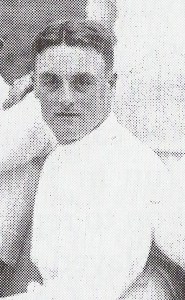
He was a keen sportsman and played for the 2nd Pals battalion cricket team. John was affectionately known in his unit as ‘Puff’, not meant in any derogatory way but because of his stature (a mere 5’2”) as he was always ‘out of puff’ in keeping up with the men. Many surviving pals refer to him in the Bradford Pals book and remember his kind nature and good heart. He was about to start ordination training and had been a well known preacher for several years: this would go some way to explaining his inclusion on Clayton memorials and also in his native Great Horton.
 Clayton Remembers